No. SpecialeFascismo, chimica e scienza a cura di Franco Calascibetta, Marco Ciardi, Roberto Zingales
Full Issue
Editoriale
Articoli
-
La via del fascismo è lastricata di buone intenzioni: Rapporti e conflitti fra le istituzioni di ricerca scientifica e il regime
The relationship of scientific research institutions with Fascism was influenced by the educational reform adopted in 1923 on the proposal of Giovanni Gentile. The fascist restructuring of public institutions, based on the same principles of the educational reform, also involved universities, academies and research agencies. After facing some early problems, the Mussolini government showed to the scientific community by alternating coercive tools with consensus awarding and exhibited a technocratic vocation.
-
Scienza, Matematica e Regime
Without Fascism, would Italian science have developed along the same trajectories and at the same rhythm? More specifically: have the regime and its main exponents shown any particular attention to research and its applications with the aim of shaping a “Fascist science”? And how did the men of science react to such a somewhat cumbersome political presence and to the repressive attitudes of Fascism when it targeted universities and research? What were the consequences of those twenty years for the development of Italian science in the second half of the century? Some answers to these questions are provided by focusing on Mathematics, traditionally considered the most impermeable science to the social and political context, and which was very developed in Italy, even at the end of the First World War.
-
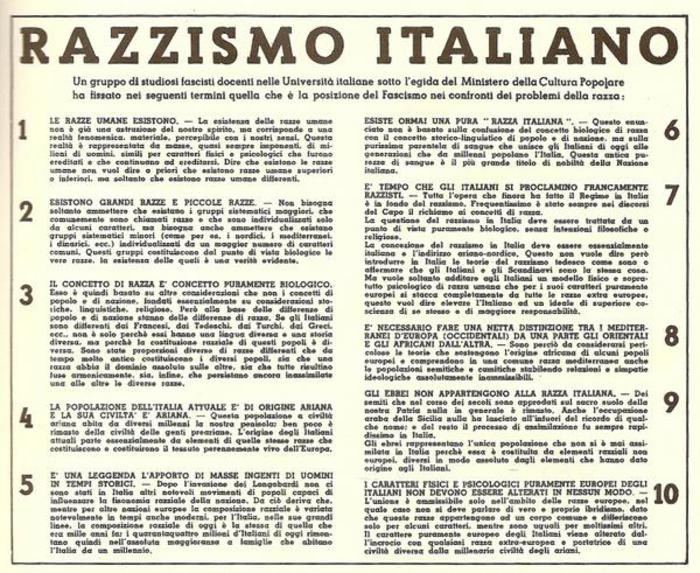
Leggi razziali e scienza nell’Italia fascista
Il 14 luglio 1938 il Giornale d’Italia pubblica il Manifesto degli Scienziati razzisti. È firmato da dieci accademici, non tutti di primo piano. Il documento costituisce la base teorica sulla base della quale, a iniziare dal successivo mese di settembre, vengono varate le leggi di discriminazione razziale. L’affermazione cruciale del Manifesto è il concetto biologico di razza. Le razze esistono, affermano i dieci firmatari. E, infatti il documento diventerà, giustamente, noto come Manifesto della Razza.
-
Compagnia di giro. La transizione dei chimici italiani dal fascismo alla democrazia
The leading group of the Italian chemical community passed from the fascist regime to the post-war democracy without any upheaval. Also, the chemists, who were most heavily involved in the fascist policy, were not seriously hit by the tribunals which had to judge them or escaped any trial. The transition took place amid total academic solidarity.
-
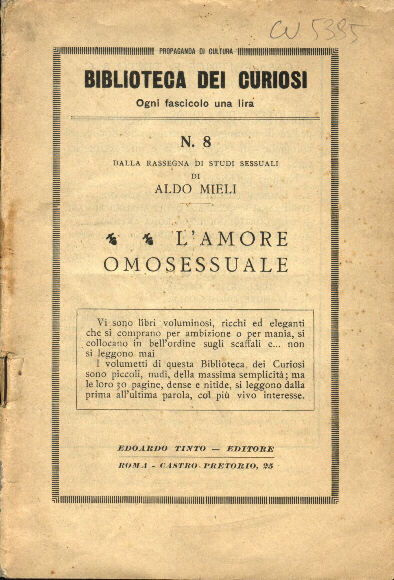
Aldo Mieli e il fascismo
Aldo Mieli (1879 - 1950), a chemist from Leghorn, is internationally well-known as one of the pioneers of the contemporary history of science. Jew, homosexual, and socialist in his youth, he was obliged to cope with the tragic, historical events of the first half of the Twentieth century. From Italy he was obliged to take refuge abroad, first in France, then in Argentina. The paper focuses on Mieli’s relationships with Italian Fascism, which were marked by illusions, political naivety, mistaken expectations, but in Argentina Mieli could make public his radical opposition to Fascism and Nazism.
-
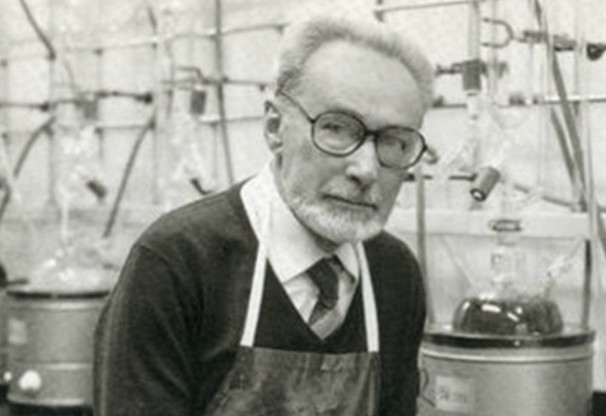
Le cinque lire dell’aquila e i fiordalisi del Commendatore: Primo Levi dal liceo alla laurea in Chimica, ai primi lavori negli anni 1935-1942
As a student of the Turin Royal Classical High School Massimo D’Azeglio, the young Primo Levi was captivated by the potential of Chemistry in the academic year 1935/36. It was a complex period of history, marked by important and life-changing events at a national and European level. After enrolling in a Chemistry degree course and gaining excellent marks in the requisite examinations, Levi could not do degree thesis based on laboratory experiments, due to the anti-Jewish laws that came into force in 1938; he was forced instead to do a meta analysis of previous research. His degree, conferred in June 1941, was followed by a variety of widely differing professional experiences.
-
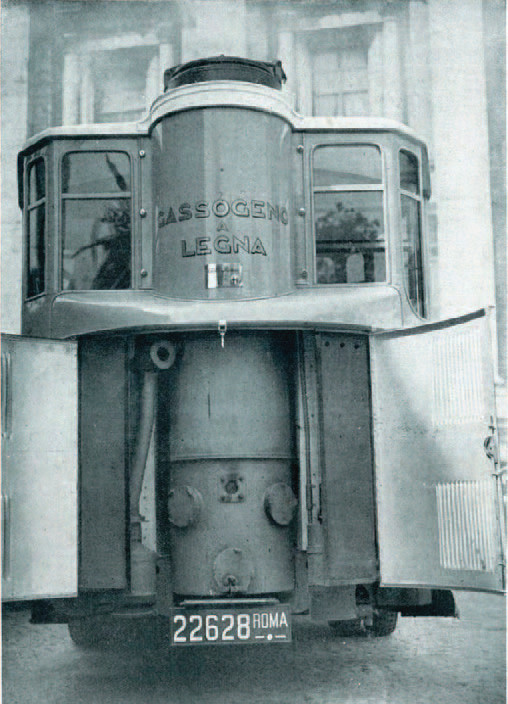
La politica autarchica e la comunità chimica italiana: Il ruolo di Nicola Parravano
The adhesion of the Italian chemical community to fascism was, as is well known, quite generalized, apart from some personal exceptions. The consensus that personalities from the academic and industrial world showed towards the regime was particularly convinced in the years in which the autarkic policy was born and developed. This contribution aims to describe in particular the position of complete consonance with the scientific programs of fascism of Nicola Parravano, who was one of the most important leaders of the Italian chemical community in the years between the two world wars.
-
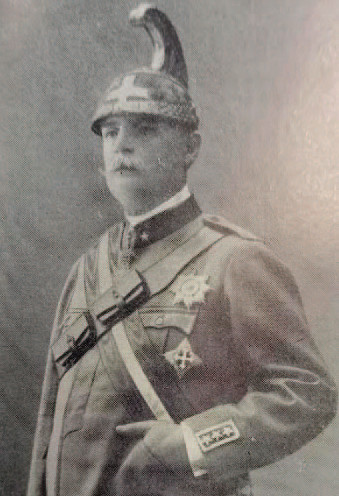
Come la Chimica toscana si prostrò di fronte al fascismo: Il caso di Piero Ginori Conti
The purpose of the present work is to arouse interest, in learning more about the Tuscan Chemical Industry. The small Tuscan community could rely on a limited number of industrialists; one these few was Piero Ginori Conti (1865 - 1939), prince of Trevignano. He was the key driver in revival of the Larderello industrial activity in the chemical and energy field. The present work tries to throw light on what may have gone wrong with Prince Piero Ginori Conti’s economical politics during those years when in Italy the dictatorship struggled to establish and later, when the whole Nation was subjugated to fascism.
-
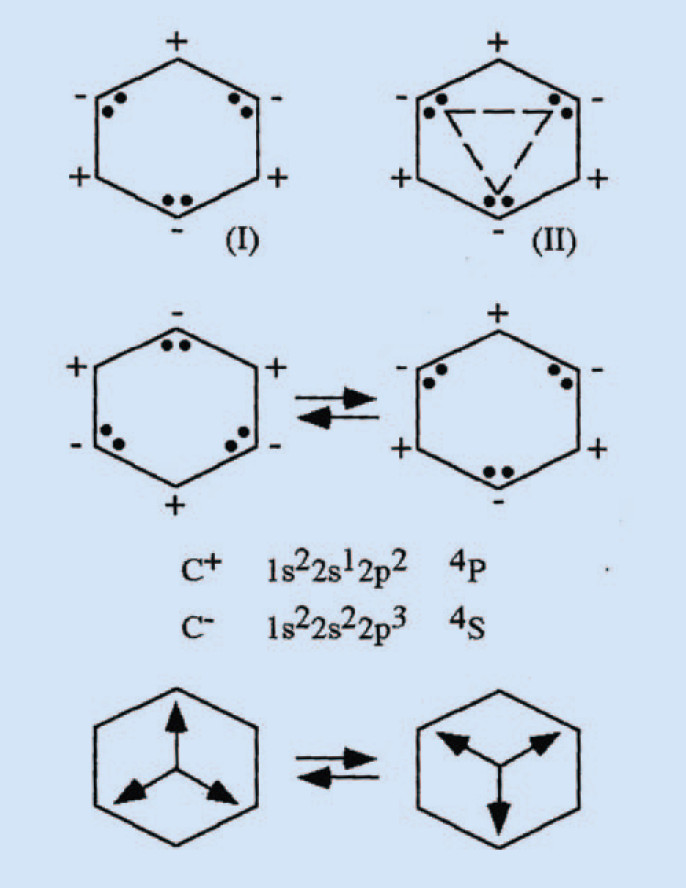
Chimica e fascismo: Il contributo epistemologico e culturale di Giovanni Battista Bonino (1899 - 1985) durante gli anni del fascismo
The aim of this paper is to draw a picture of Giovanni Battista Bonino’s (1899 - 1985) important research efforts, in order to better assess his path-breaking papers on quantum chemistry. The focus is on Bonino’s innovative amalgamation of organic chemistry with quantum physics and group theory. At the same time, his portrait with a glance at the cultural relations within the contemporary scientific community is discussed. Bonino obtained in the year 1927 the chair of Physical Chemistry at the University of Bologna, one of the first such chairs in Italy. He was also the first chemist in Italy at the beginning of the Twenties to perceive the importance of Infrared spectroscopy. Bonino began research in 1929 on Raman spectroscopy with the main objective of studying the constitution of organic compounds. In his work from 1929 to 1941, quantum chemistry emerged as a sub discipline of theoretical chemistry in Italy. The original contribution of Bonino consisted first in a new recommendation for a benzene formula with polarized double bonding, and second in the generalization of Werner’s concept of coordination. Moreover, this paper emphasizes the role of Bonino for the formation and strengthening of scientific and cultural relations between Italian fascism and German nationalism after the Rome-Berlin axis of 1936.
-
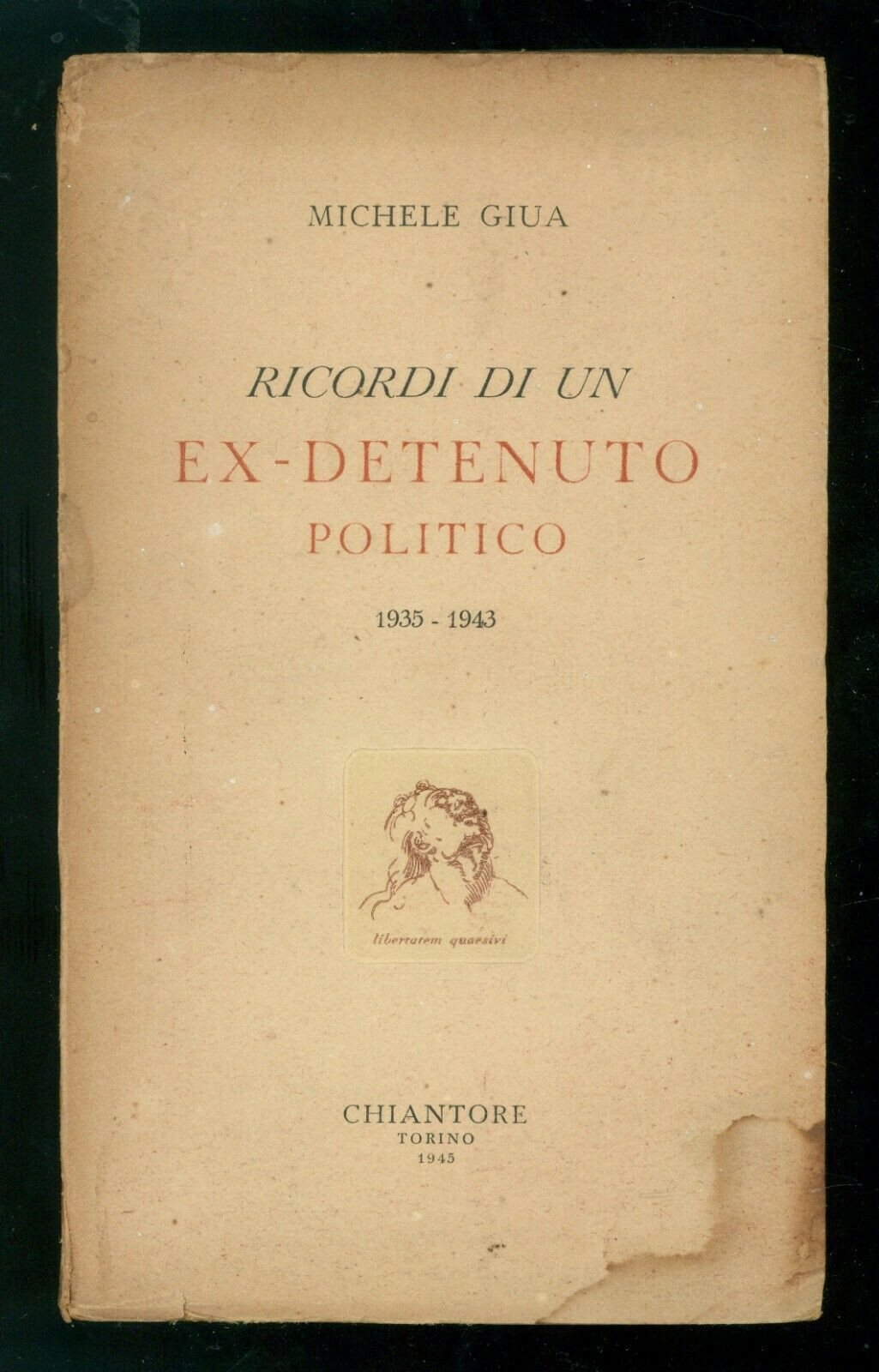
Michele Giua: libertà e morale di un chimico socialista
A portrait of the chemist Michele Giua, engaged in teaching and research at the University and then in parliamentary activity, forced to eight years of suffering in captivity. A man with a prodigious memory, which allowed him as a prisoner to write scientific books and then to successfully counter the arguments of his opponents. The polite polemical system of Michele Giua was evident in his observations as a man of science even in the parliamentary sphere. Considered a master by his colleagues for wisdom, extreme rigor, high moral conscience, he was engaged in creating a fairer society, maintaining a deep faith in socialism and freedom as essential condition of higher morality.
-
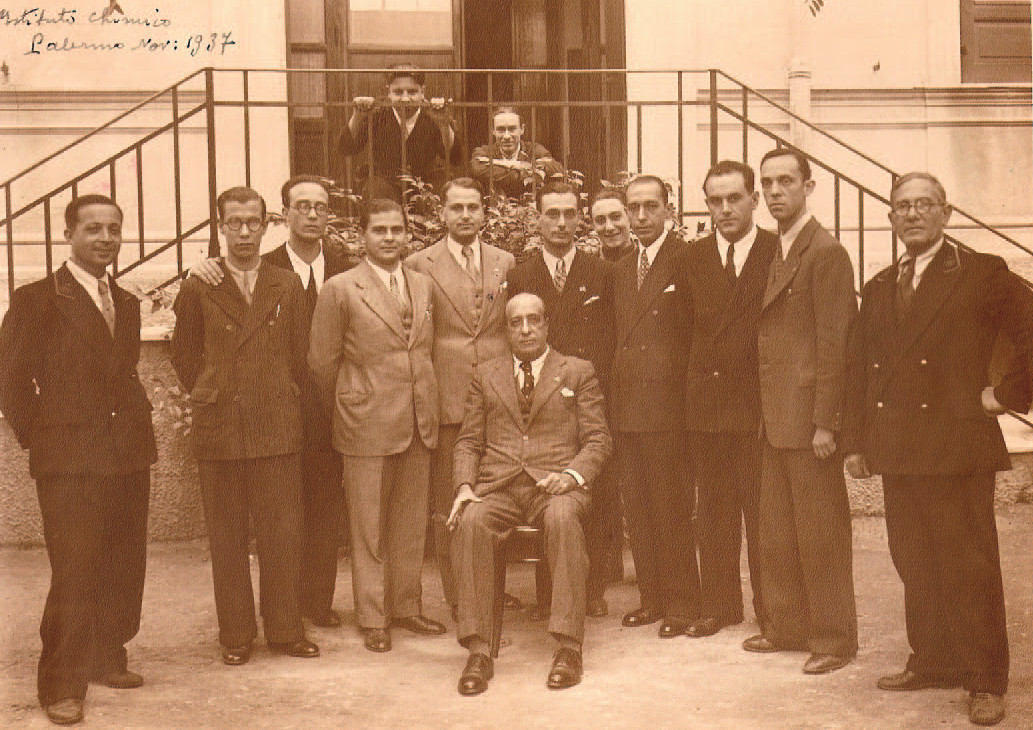
La Chimica a Palermo tra le due guerre
After Cannizzaro and Paternò’s departure, Chemistry in Palermo lost its cultural leadership in Italy, whilst some feeble attempts were being made to create a modern chemical industry, to exploit local resources. In the academic field, a new chemical element was identified. In the industrial field, despite the autarkic support of the government, the inability to keep up with the market’s requests, the inadequacy of the industrial organisation and the negative influence it received from politics, led even promising industrial enterprises to failure.