Volume 4, No. 4Chimica nella Scuola n. 4 2023
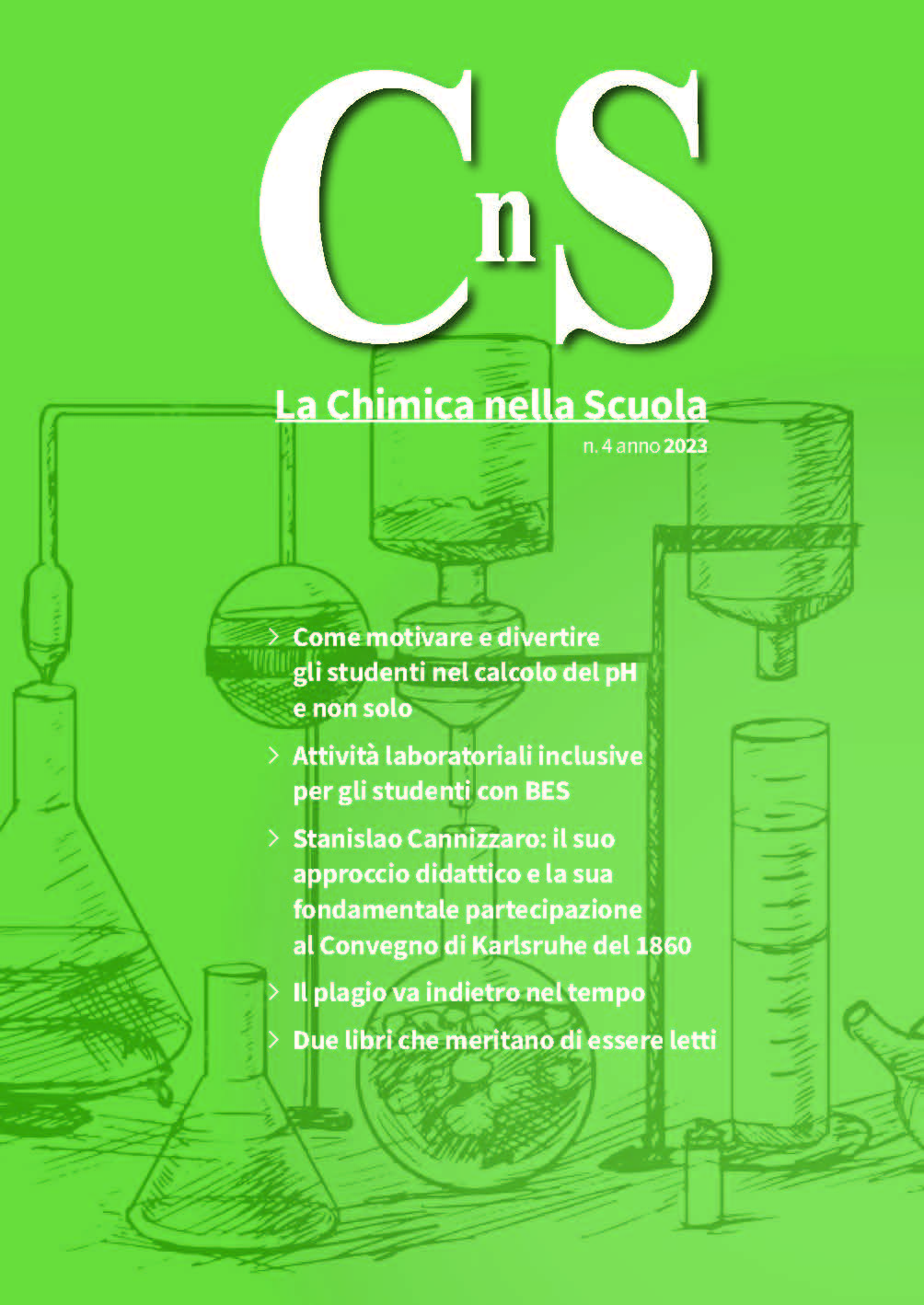
Full Issue
Editoriale

L’approccio storico-epistemologico per la scuola superiore
-
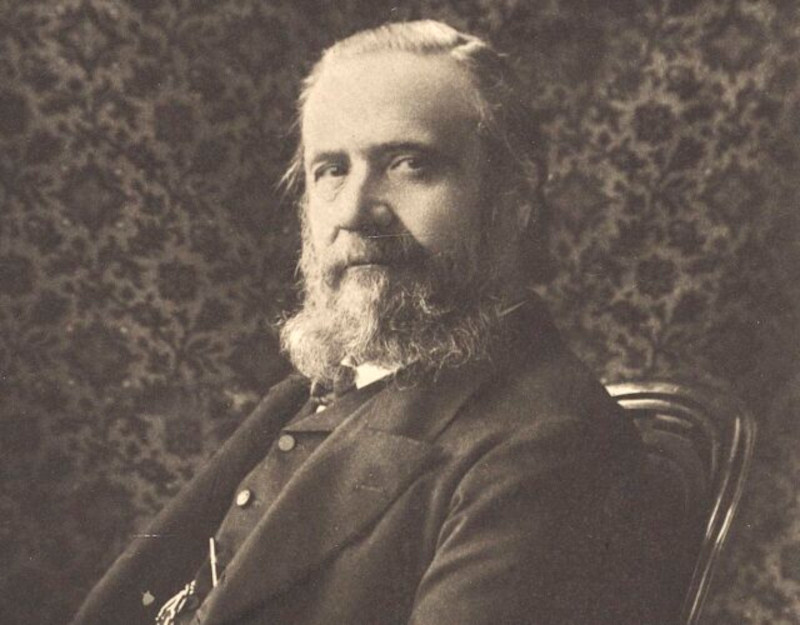
Il metodo didattico di Stanislao Cannizzaro
By analysing some Stanislao Cannizzaro’s papers and conference texts, it can be shown the way in which he taught atomic theory, which he considered the turning point in XIX century Chemistry.
Percorsi laboratoriali
-
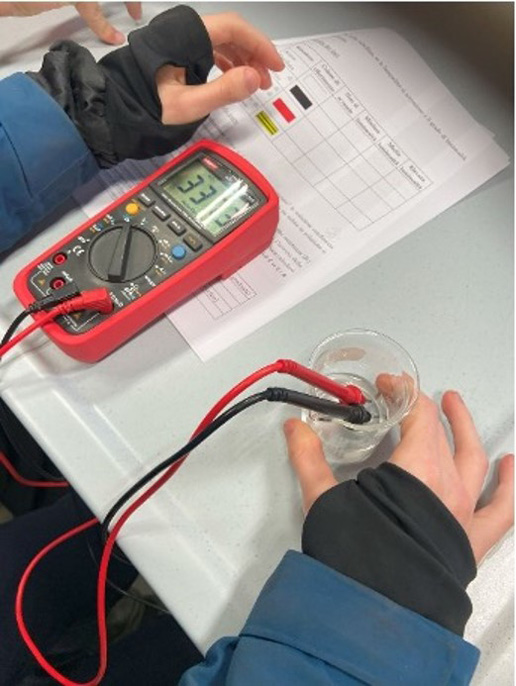
L’inclusione degli alunni con BES nelle attività del Laboratorio di Chimica
The project, dedicated to the school inclusion of students with special educational needs (SEN), has demonstrated that the active and the constant dialogue among the theoretical chemistry teacher, the laboratory teacher and the support teacher, has allowed the planning of laboratory activities that has made these students able to practise more than an experience without being depleted of the fundamental contents and procedures.
-
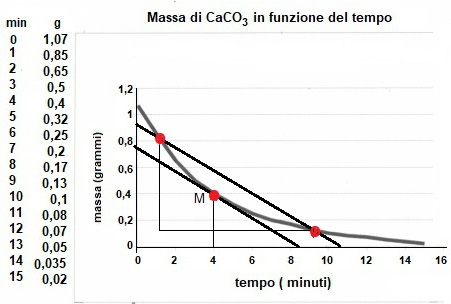
Un approfondimento relativo alla velocità istantanea di reazione
Usually, at the level of basic chemistry in the first two years of secondary school, the reaction rate is defined by referring to the average speed; sometimes and only briefly the concept of instantaneous speed is mentioned. In this article a possible in-depth analysis of the instantaneous reaction rate is provided; the analysis is not based on a theoretical-descriptive way, but uses an experimental-inductive approach.
Un nuovo approccio al calcolo del pH e non solo
-
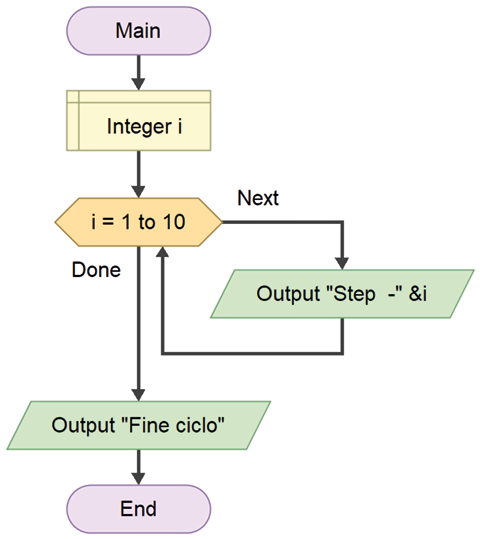
Imparare la chimica analitica con il coding in Python
The innovation of teaching and learning methodologies in STEM (Science, Technology, Engineering, and Mathematics) is a priority for educational systems globally. It represents a fundamental challenge in schools to improve teaching effectiveness and the acquisition of technical, creative, digital, communication, collaboration, problem-solving, flexibility, adaptability, and critical thinking skills. Furthermore, the Ministry of Education aims to promote the establishment of laboratory spaces and the provision of suitable digital tools to support curriculum learning and the teaching of STEM subjects. The use of AI in STEM education opens new possibilities for engaging and interactive learning, fostering curiosity and exploration, and preparing students for the challenges of the digital age. This article presents a didactic approach to common problems in analytical chemistry, but also suitable for all STEM disciplines, which utilizes the foundations of the Python programming language to develop algorithms for solving various chemistry-related problems, including stoichiometry and analytical chemistry. Moreover, this educational program, divided into multiple modules, consists of laboratory sessions conducted in a computer or multimedia classroom. During these sessions, students will learn how to set up calculations and begin programming while gradually familiarizing themselves with the Python program’s commands and syntax. Among the codes developed so far by a group of students from ITIS Cannizzaro in Colleferro (Rome), there are a unit converter, a tool for calculating the pH of weak and strong acids and bases, a tool for calculating titration curves, and others currently under development such as Webapps. The utilization of AI in this approach brings numerous benefits, including personalized learning, adaptive feedback, data analysis for optimization, real-time assistance, and fostering curiosity and digital preparedness.
Pagine di storia
-
Gli atti del Congresso di Karlsruhe del 1860
During 1860 in Karlsruhe Kekulè organized an important chemistry congress with the hope to solve some problems related to the nature of atom and molecules. In this congress Stanislao Cannizzaro presented his results collected in the Sunto di un Corso di Filosofia Chimica published on Nuovo Cimento. Here we publish the act of this congress, collected by Anschütz and translated by Michele Giua; the Italian version was published on an almost unobtainable journal. In this act the role of Cannizzaro appears to be relevant and decisive for the results of the congress.
-
Plagio ovvero i mediocri copiano…
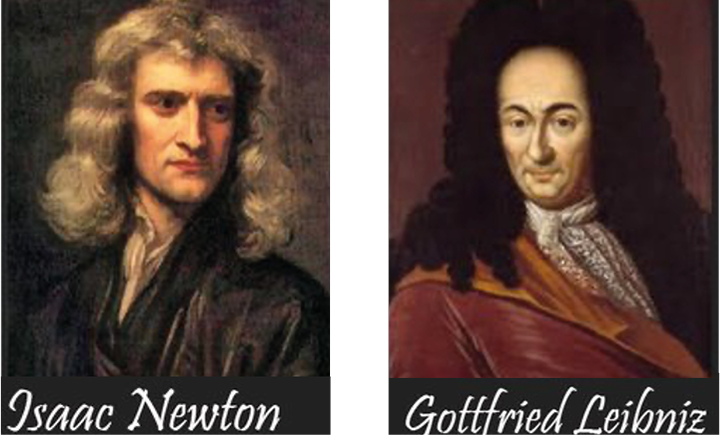
Among the ethically improper activities that damage Science, plagiarism is that which is committed to the detriment of another by taking some or in toto his work or even an idea. In this paper I give a brief discussion of how to avoid the indictment of plagiarism and then, demonstrating how insidious this crime can be. A few well-known examples show how the work of distinguished scientists has, in some cases, been considered a form of plagiarism.